“Brands are over. Brands are so back. Brands are dead. Long live the brand.”
Depending on the month, holiday or even what day it is, these sayings may all feel relevant, tiring or monotonous. That’s the reality of building and keeping a brand top-of-mind, especially as consumer choices shift and what once worked even 5 years ago, no longer rings true. Only 71% of consumers say they feel some sort of loyalty towards a company, but only 25% feel “very loyal,” according to a 2024 study from customer experience firm Medallila.
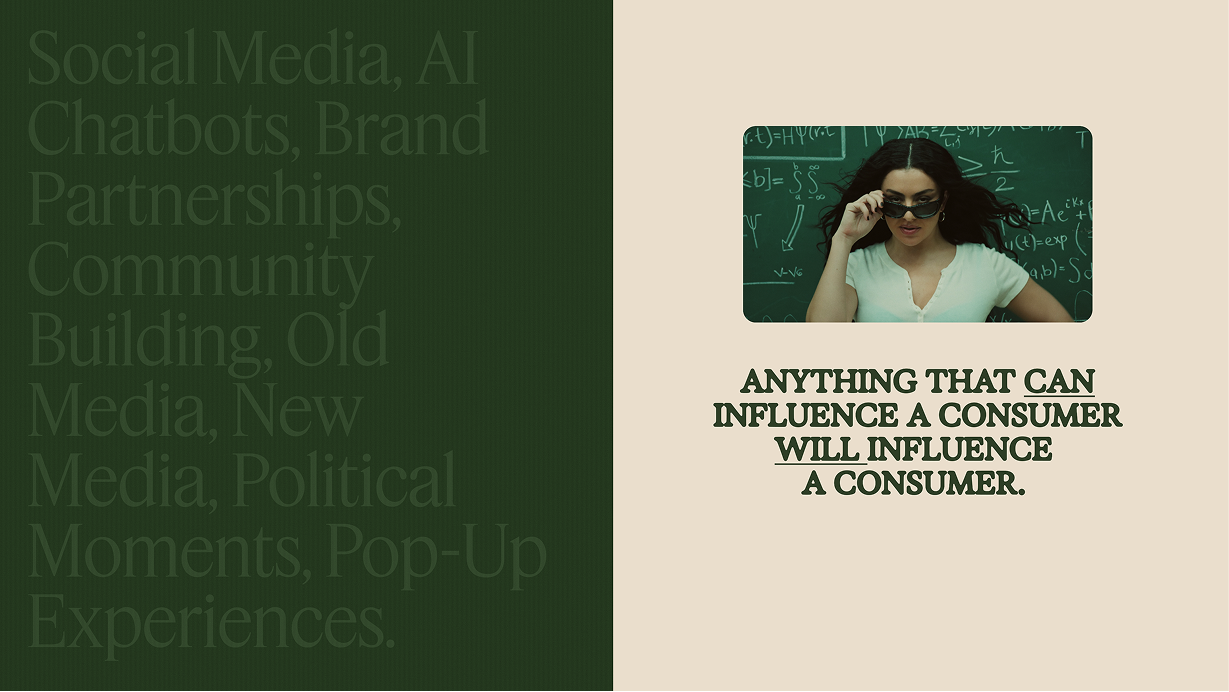
This lack of loyalty means it’s hard for brands to keep hold of consumers, especially when their devotion is no longer influenced by a single purchase. Today’s marketing funnel requires relevancy across social media, AI chatbots, exciting and relevant brand partnerships, community building, working with old and new media, pop-up experiences, appealing to different generations and navigating political moments. Our overall consensus is that today, anything that can influence a consumer will influence a consumer.
While it is so much harder to navigate how to set up a brand for success, we can look at what has worked for companies in the past year to understand what works currently. Our playbook includes several insights to make it slightly easier to be a brand in 2026.
How to Keep It Relevant Without Making It Weird
Authenticity still matters especially on social media. Nailing it on social platforms is a completely different problem.
When a big cultural moment happens, it seems silly not to acknowledge it. But consumer interest is waning. According to Sprout Social, only 44% of consumers surveyed said that if a brand posted about Taylor Swift’s “The Life of a Showgirl” album, it should be relevant to the brand’s product or service.
Original content still works best as opposed to chasing every trend. For Bad Bunny’s Super Bowl performance, Duolingo rolled out a campaign to encourage people to learn Spanish. The company saw a 35% week-over-week increase in new Spanish learners after its release.
Partnerships, Reinvented
Consumers love anything that feels—or actually is—limited edition. It’s why collaborations between brands still work, as long as it’s not oversaturated.
Part of what worked with that collaboration is the timeliness. And it matters for both when something is released as well who or what other brand a company may be working with.
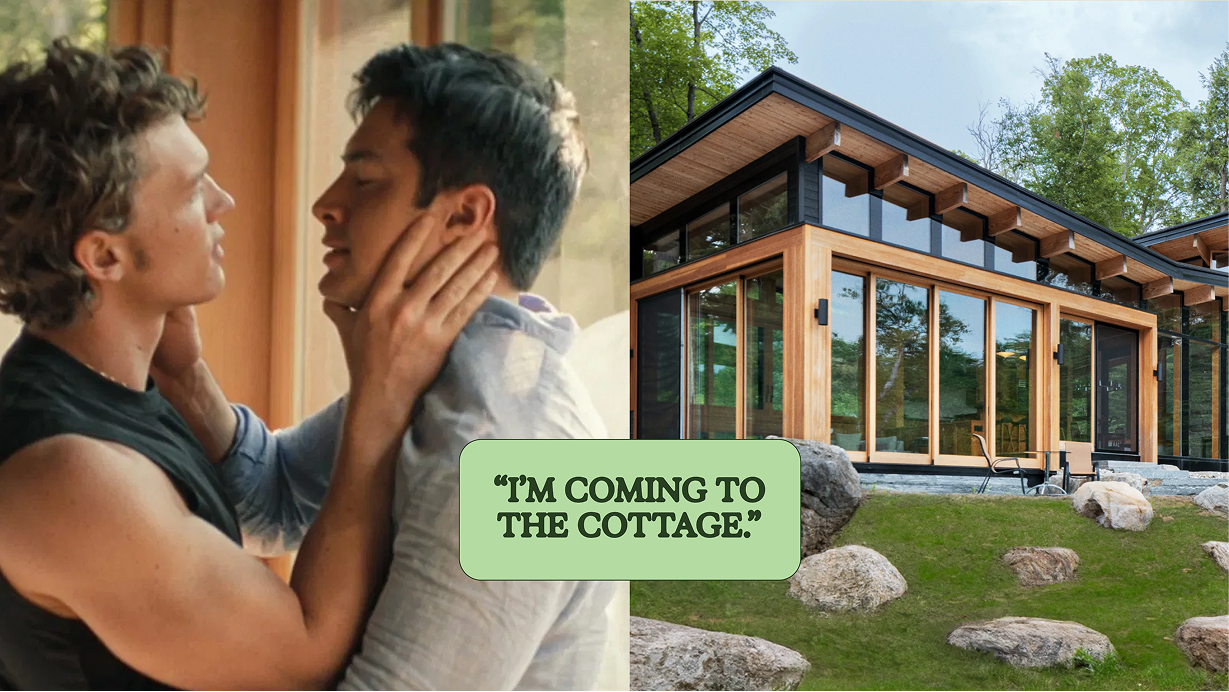
Airbnb has announced all sorts of homes and experiences to try on its platform, whether its Barbie’s Malibu DreamHouse in 2023 to its latest drop, which allowed people to rent the cottage that was featured in the hit series, “Heated Rivalry.”
The mania around F1 continues, with more collaborations this year, such as eyewear company Gentle Monster, releasing eight styles, with some incorporating Disney elements.
In early 2025, artist Sabrina Carpenter collaborated with Dunkin’ to release Dunkin’s Shaken Espresso. Her song “Espresso” was the number one most-streamed song on Spotify in 2024. Along with the actual drink, Dunkin’ also released a limited-edition espresso shaker which sold out in 90 seconds.
The social post announcing the release became the number one most viewed, liked, and commented on organic post in the company’s history, with more than 12.7 billion earned media impressions, according to The Drum.
Chronically Online vs The Right Fit
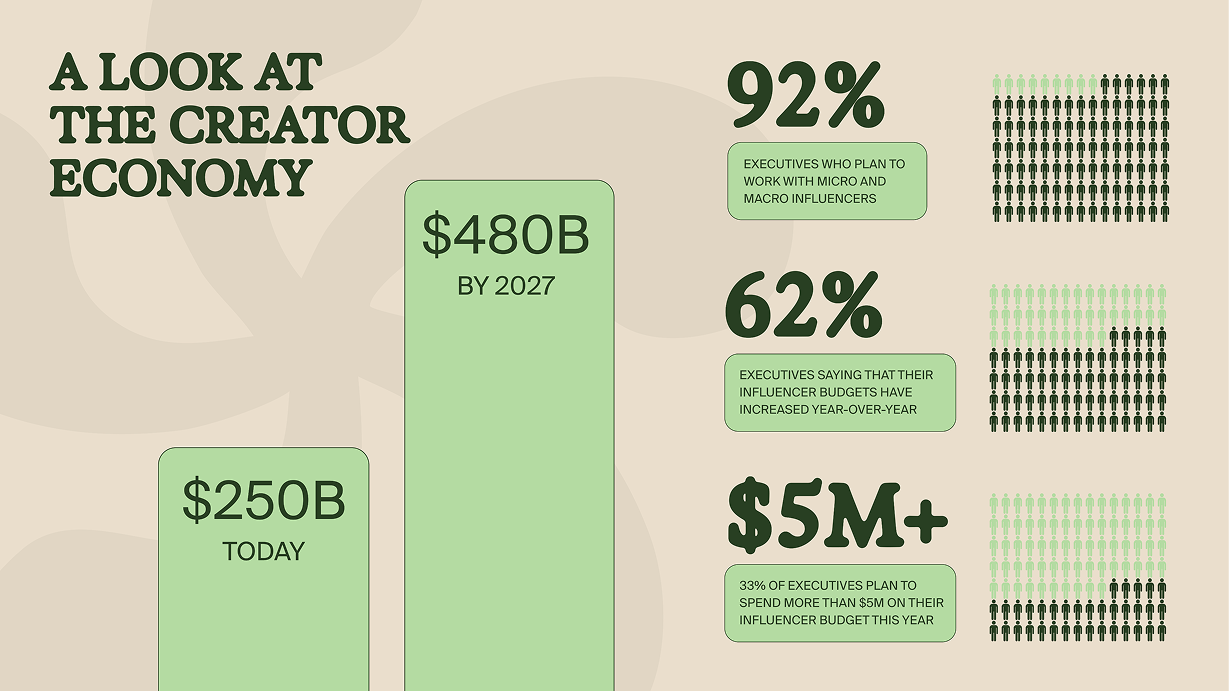
Considering Goldman Sachs estimates that the creator economy is expected to grow to $480 billion by 2027, doubling from the $250 billion today, working with creators and influencers is no longer a nice-to-have but a necessary and vital part of any marketing budget.
It’s becoming a bigger part of every marketer’s budget as well, with 62% industry executives saying that their influencer budgets have increased year-over-year, with 33% planning to spend more than $5 million this year, according to a study by marketing firm Linquia.
And 92% of marketers plan on working with micro influencers, those with 5,000 to 100,000 followers and macro, those with 100,000 to 500,000 followers, according to the same study.
Many companies are looking to work with the top creators today, something that isn’t possible, said Allison Ellsworth, co-founder and chief brand officer of Poppi, the prebiotic soda acquired by PepsiCo last year.
Poppi, for example, worked with influencers Alix Earle and Jake Shane when they had much smaller followings. Earle was in college and Shane only had 90,000 followers.
“What you need to do is find the next Alix Earle and grow together,” said Ellsworth.
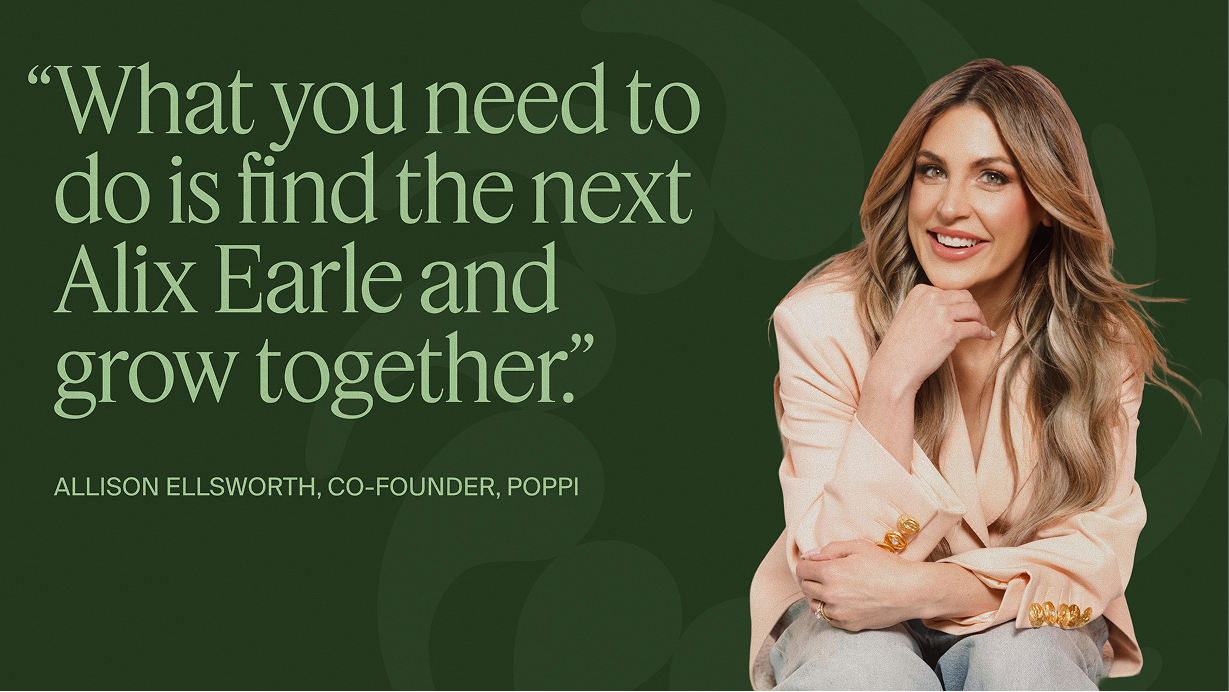
Poppi’s work with Alix Earle during Coachella in 2024—which included 20 TikTok’s—led to a 200% spike in sales.
The company has continued working with her, from launching a limited-edition can design to appearing in a 2025 Super Bowl ad.
Working with creators means leaving the long briefs behind and making it one to two pages max, says Ellsworth.
Don’t feel confined to just social media either.
Bobbie, the baby formula company, worked with cookbook author Molly Baz, to unveil the first breastfeeding billboard in Times Square. Complete with the tagline “Everybody’s gotta eat,” the 2024 ad used out-of-home advertising to challenge the stigmas around how parents choose to feed their children.
Anyone can scroll by a social media post. An outdoor billboard in Times Square was meant to get people to stop and look up and reconsider their thoughts on formula, on breastfeeding in public, and the fact that like Molly, 70% of moms are doing both.
People expect a formula company to just advertise formula. But we know that most of our customers are breastfeeding and there is still a stigma around breastfeeding in public and a stigma around using formula. So we put the reality of it all in the media mecca of the world. If Molly Baz can do it there- any mom can do it anywhere, says Chief Brand Officer, Kim Chappell.
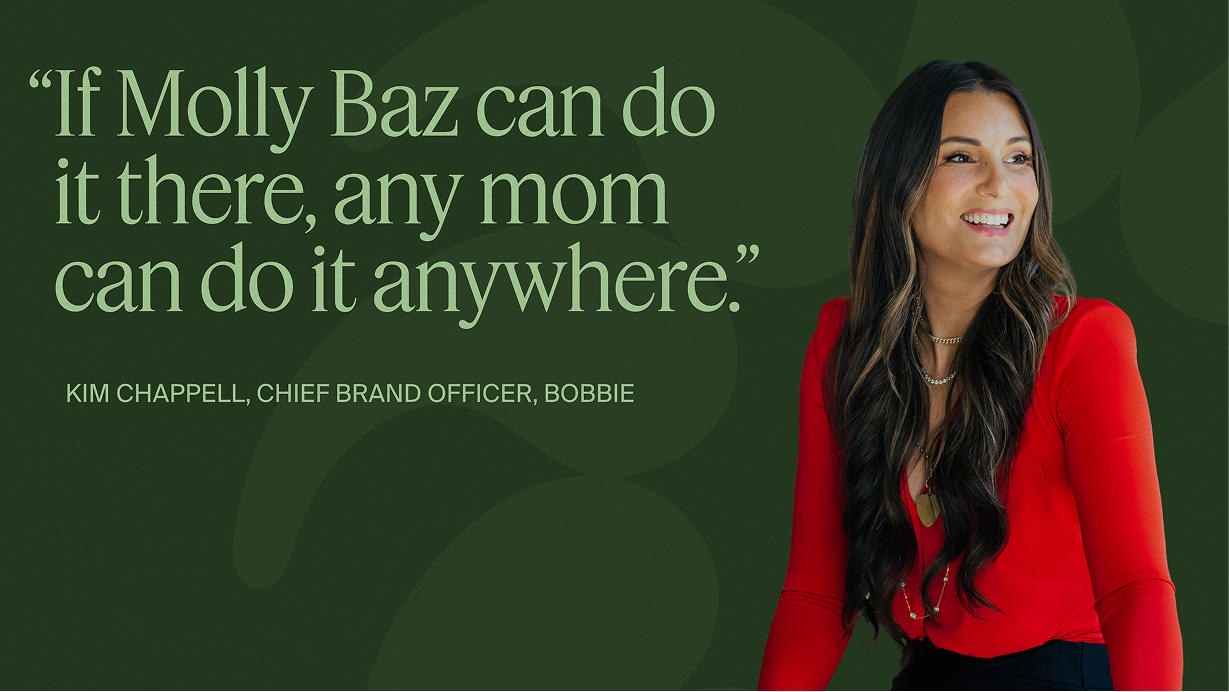
The company has since doubled down on telling more advocacy driven marketing stories when they appointed rapper Cardi B as its Chief Confidence Officer in the fall as she surprised the world with her fourth baby, released her new album and prepared for a national tour– doing it all with classic Cardi confidence. Alongside the brand she championed for national Paid Leave for all working parents and safer births for women of color in the US as she prepared for the birth of her baby boy.
Zero In, Don’t Zoom Out
It was an easier time about ten years ago, when you could solely market to millennials.
Now, it’s easy to get lost and try to send signals to millennials, Gen Z, Gen Alpha and Gen X (when people tend to remember them).
Millennial consumers account for 28.3% of all retail spending, according to Capital One Shopping. Gen Z had $984 billion of spending power in 2023, according to market research firm Kantar. Gen Alpha shopping behavior influences more than $28 billion in direct spending, according to Numerator, a consumer insights company.
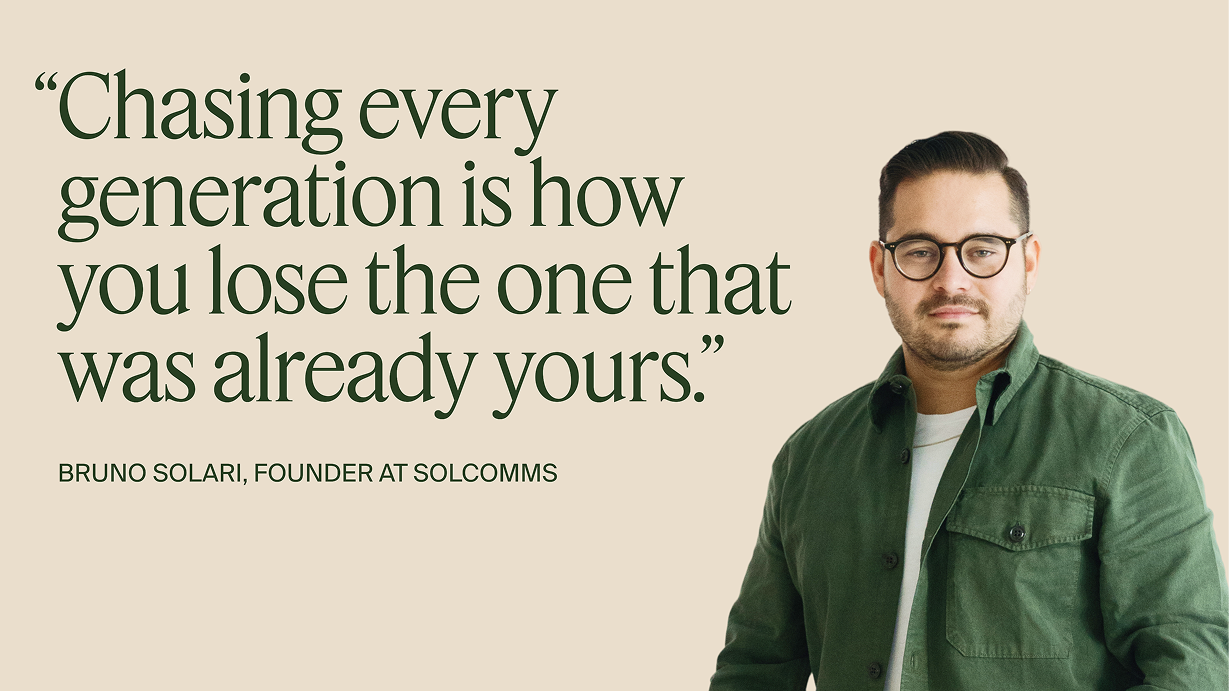
There’s a lot of money on the line to reach all these generations. But, in most cases, it’s better to double down on your core audience than to chase new ones that may want nothing to do with your brand.
ColourPop Cosmetics has focused on catering to millennials and Gen Z who love their collaborations whether it’s “Shrek” or “The Twilight Saga.” The company’s Twilight collection in 2024 sold out in 10 minutes.
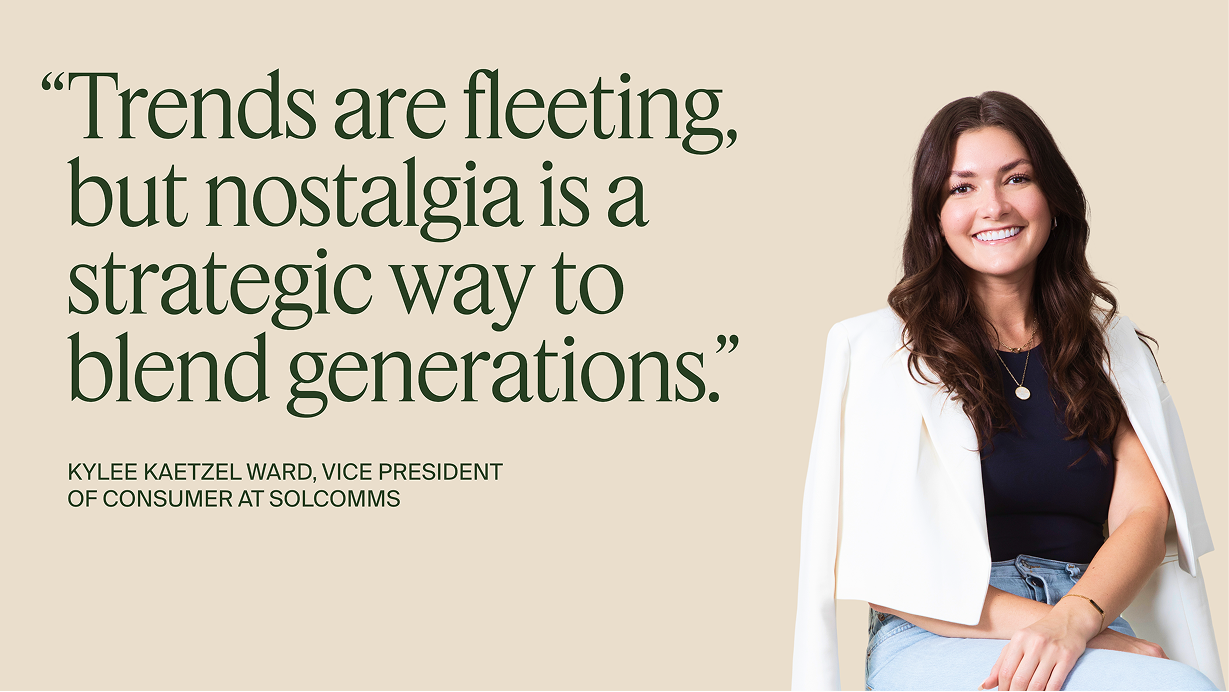
Hollister and Abercrombie & Fitch Co. (which is also the former’s parent company) has catered to both Gen Z and millennials nostalgia for the early aughts.
In July 2025, Hollister released a Y2K capsule collection as a way to celebrate its 25th anniversary. Abercrombie & Fitch Co. meanwhile regularly updates its archive collection, which despite the name, is actually full of new items inspired by the 2000s.
Everyone’s In Their Eras Stage
If Taylor Swift can celebrate the different eras of her life, so can brands…sometimes.
Rebrands, once a logo change that passed quickly to a newswire, now has the potential of becoming a national conversation and disaster.
Cracker Barrel attempted a $700 million rebrand and quickly walked it back. Meanwhile, Amazon debuted a new logo and no one got upset. Apple TV Plus removed the Plus and released a video showcasing how it came up with its new visual identity.
The point of brands existing within different eras of its history means these moments can come and go. As part of its Super Bowl campaign this year, Poppi employees all changed their profile photos on LinkedIn to reflect the “vibes” bit that was showcased in the ad.
You don’t need to completely rebrand. Duolingo killed its mascot Duo in 2025—a marketing campaign that signaled Duolingo in a short era without its namesake bird. Two weeks later and many active Duolingo users amassing points on the app to bring Duo back, the bird was revived.
Navigating Politics
We no longer exist in a world where consumers expect to hear crickets from brands during worldwide and national issues.
And if a brand removes or diminishes any of its previous positions, consumers will let the company know by spending their money elsewhere.
American Eagle’s “Sydney Sweeney Has Great Jeans,” campaign, which didn’t even center DEI but led to outcry from consumers that some believed was racial in nature, had the complete opposite effect.
The company didn’t stop the campaign and American Eagle executives said it drove stronger-than-expected sales during its earnings call in September 2025. The Sydney Sweeney jeans collection also sold out within a week.
In January, the two shooting deaths of U.S. citizens in Minneapolis, Minnesota, by federal agents led to several brands speaking out. Dieux, a skincare brand, decided to donate 100% of its proceeds on January 27 to “support organizations helping Minnesotans affected by ICE operations,” the company wrote in an Instagram post.
Faherty, a clothing retailer, also spoke out, as well as shut down its store in Minnesota as a “protest” and donated $25,000 to a nonprofit, the company wrote in an Instagram post on January 28.
The comments on both posts are divisive, with some praising the actions while others deriding it.
But as long as the company stays true to whatever its core values are, consumers will likely stay with them.
“It depends on where the brand started and are they changing their position to go with the current political climate and what that will mean to their customers,” said Canaves of Emarketer.
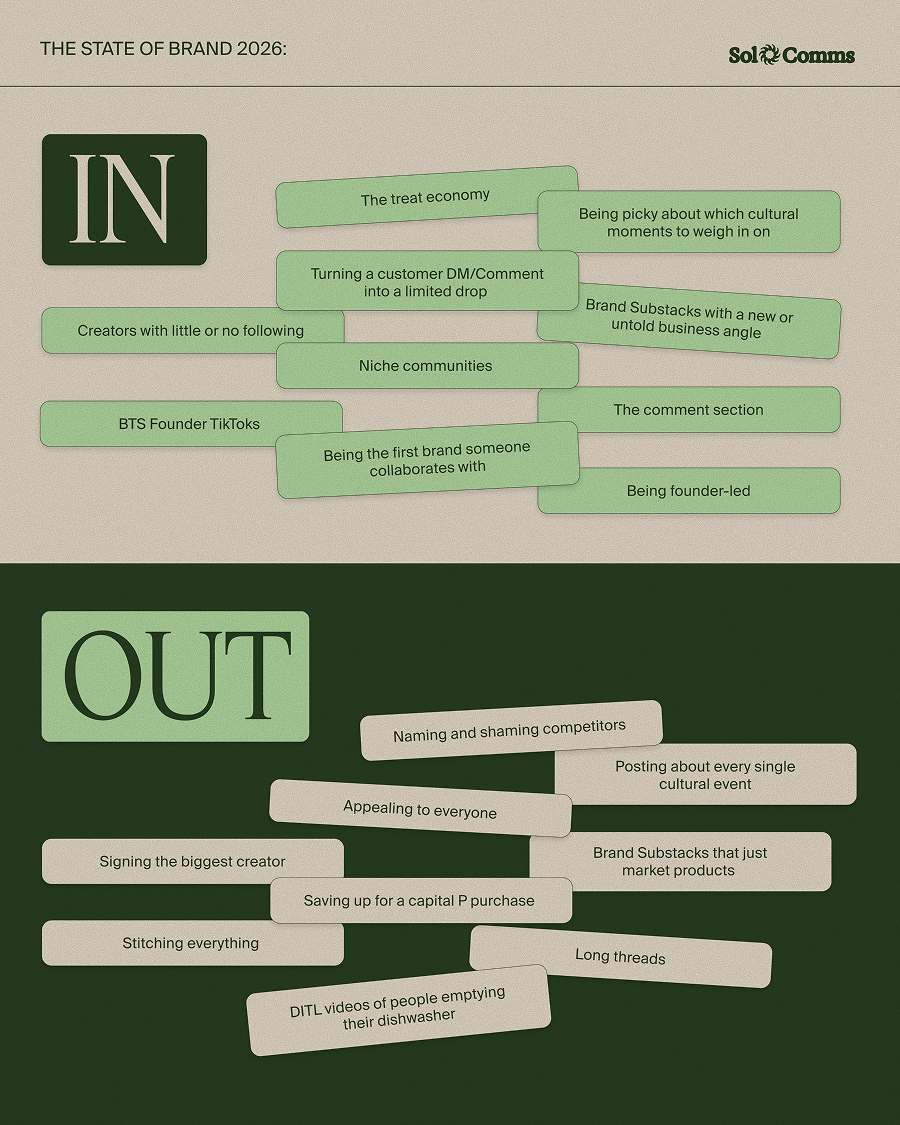
In short, here’s what we think is in and out for 2026: